Chemical Labels in a New Language: Stop Before the Unmarked Container
By SkillHaus ·
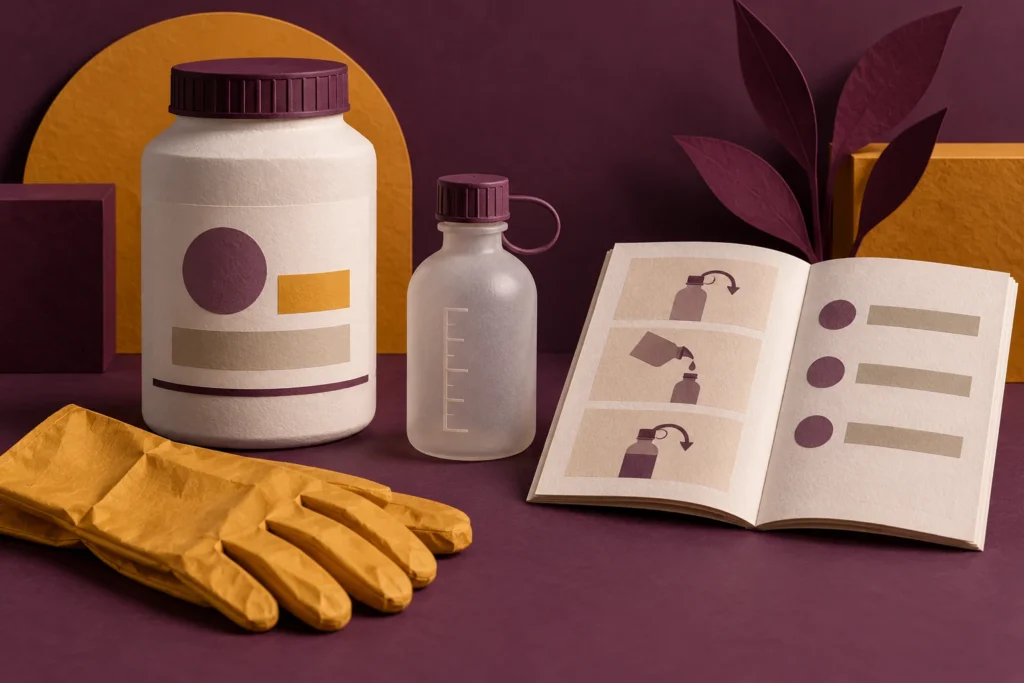
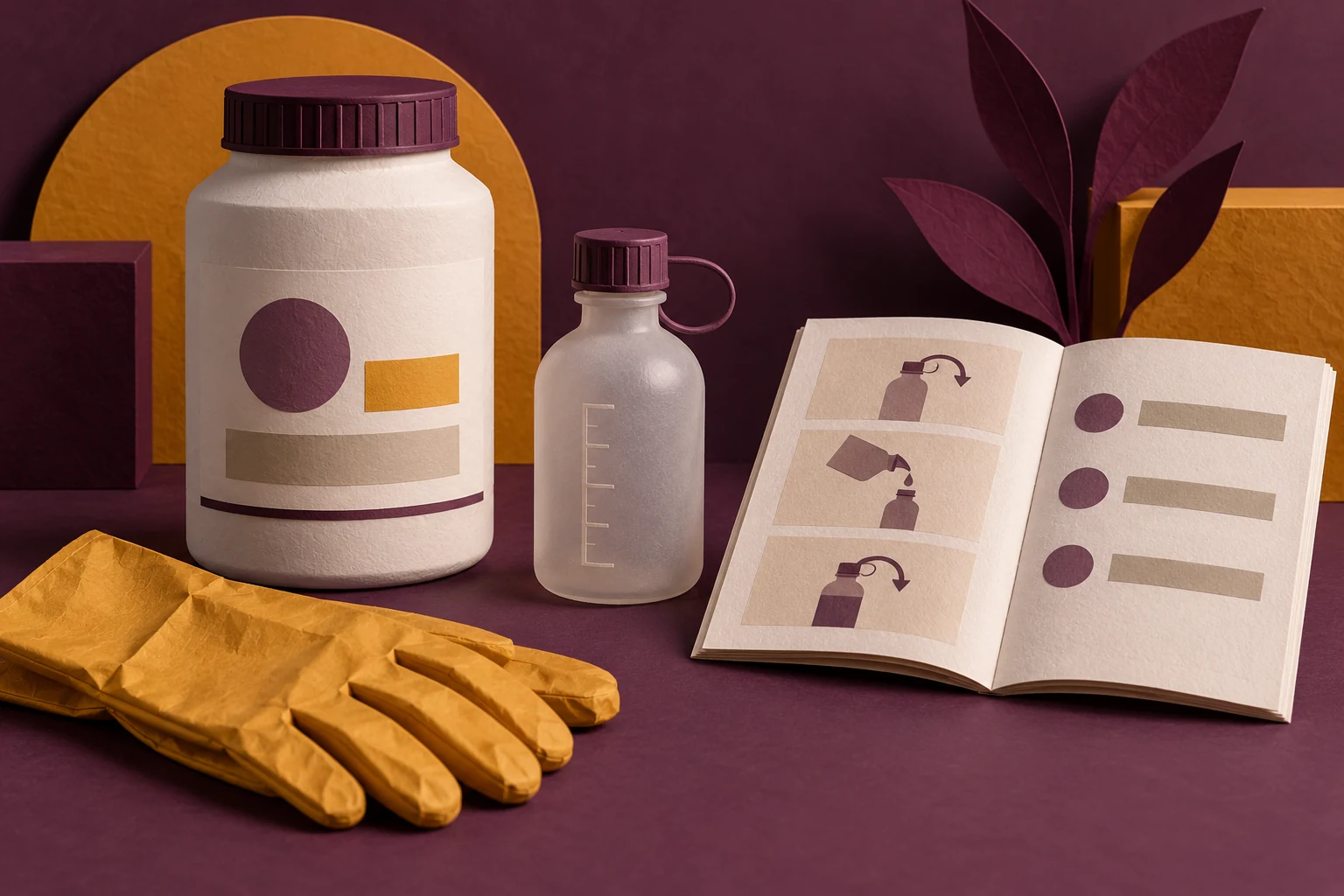
An unmarked container is not a puzzle a new worker should solve by smelling it or copying what someone else did yesterday. Before a chemical is used, the product, hazards and safe work method need to be clear to the people doing the task.
Language can add another layer of uncertainty. A label being present is not the same as a worker understanding the instruction. The answer is an appropriate explanation and safe process, not pressure to guess.
Match the container to the product information
Hazardous-chemical containers generally require correct labelling, including after transfer. Limited exceptions apply to controlled immediate use; they do not make an unknown container safe to use. Its labelling code advises against using a hazardous chemical that is not correctly labelled and describes isolation and identification of unknown substances. That work should be managed by the responsible, appropriately trained people—not improvised by a new starter. Read the NSW labelling code.
Do not rely on colour, container shape or a nickname. Similar-looking products can need very different precautions. Do not transfer chemicals into drink bottles or remove a label to make a container easier to reuse.
Know what a safety data sheet is for
A safety data sheet, or SDS, provides product-specific health and safety information. WorkSafe Victoria says employers using or storing hazardous substances or dangerous goods must obtain current SDSs and provide access to employees, contractors and emergency services. Read WorkSafe’s SDS guidance.
The label and SDS have different roles. A quick instruction from a co-worker does not replace either. Ask where the actual product’s SDS is kept and who can explain the relevant handling, storage and emergency information for your task.
Ask for understanding, not a translation shortcut
If you do not understand a word, pictogram or instruction, say what is unclear before using the product. Ask the trainer to demonstrate the authorised process in a safe setting, then describe it back. Machine translation can help a conversation, but it should not become the only control for a technical safety instruction.
WorkSafe’s GHS explanation describes how signal words and hazard and precautionary statements communicate chemical risks. Symbols are part of that system, not a substitute for knowing the product and the required method.
A useful stop-and-check example
Hypothetical situation: a worker is handed a small container described as “the cleaner” but cannot identify it. They keep clear, do not open or test it, and ask the supervisor to identify the product and provide the correct instruction. The supervisor arranges the appropriate identification and labelling process before the task proceeds.
The worker has not failed an induction by asking. The question has revealed a gap that could affect the whole crew. Record the actual product and task once resolved, rather than writing a generic note that everyone has been told to “take care with chemicals”.
Five questions before the task
- What is the exact product, and does the container match it?
- Where is the current SDS?
- Who is authorised and trained to carry out this task?
- What controls and protection apply to this product and use?
- What is the emergency response, and who is the contact?
This article does not give mixing, dilution, spill-cleaning, medical-treatment or disposal instructions. Those depend on the chemical, circumstances and competent advice. In an emergency, obtain emergency assistance and follow the site’s response arrangements rather than using a general web article as a treatment guide.
Keep state requirements separate
NSW uses WHS legislation; Victoria uses its own OHS and dangerous-goods framework. The cited guidance provides practical starting points, not proof that every clause is identical across the border. Ask for the correct local procedure when moving sites.
No new chemical-labelling reform is claimed here for the last six months. It is an ongoing safety issue checked in October 2026. Our PPE guide explains why selecting protection comes after identifying the hazard, not before.
Official sources and next steps
- SafeWork NSW: Labelling of workplace hazardous chemicals code
- WorkSafe Victoria: Safety data sheets
- WorkSafe Victoria: GHS chemical classification and labelling
For SkillHaus recruitment enquiries, contact our team. For a ruling about your pay, safety duties or visa position, use the relevant regulator or a qualified adviser.
By SkillHaus. Information checked 29 October 2026. General information, not individual legal, migration, tax or medical advice. Rules and personal circumstances can change.