Before You Touch a Fire Extinguisher: Know Your Role in the Emergency
By SkillHaus ·

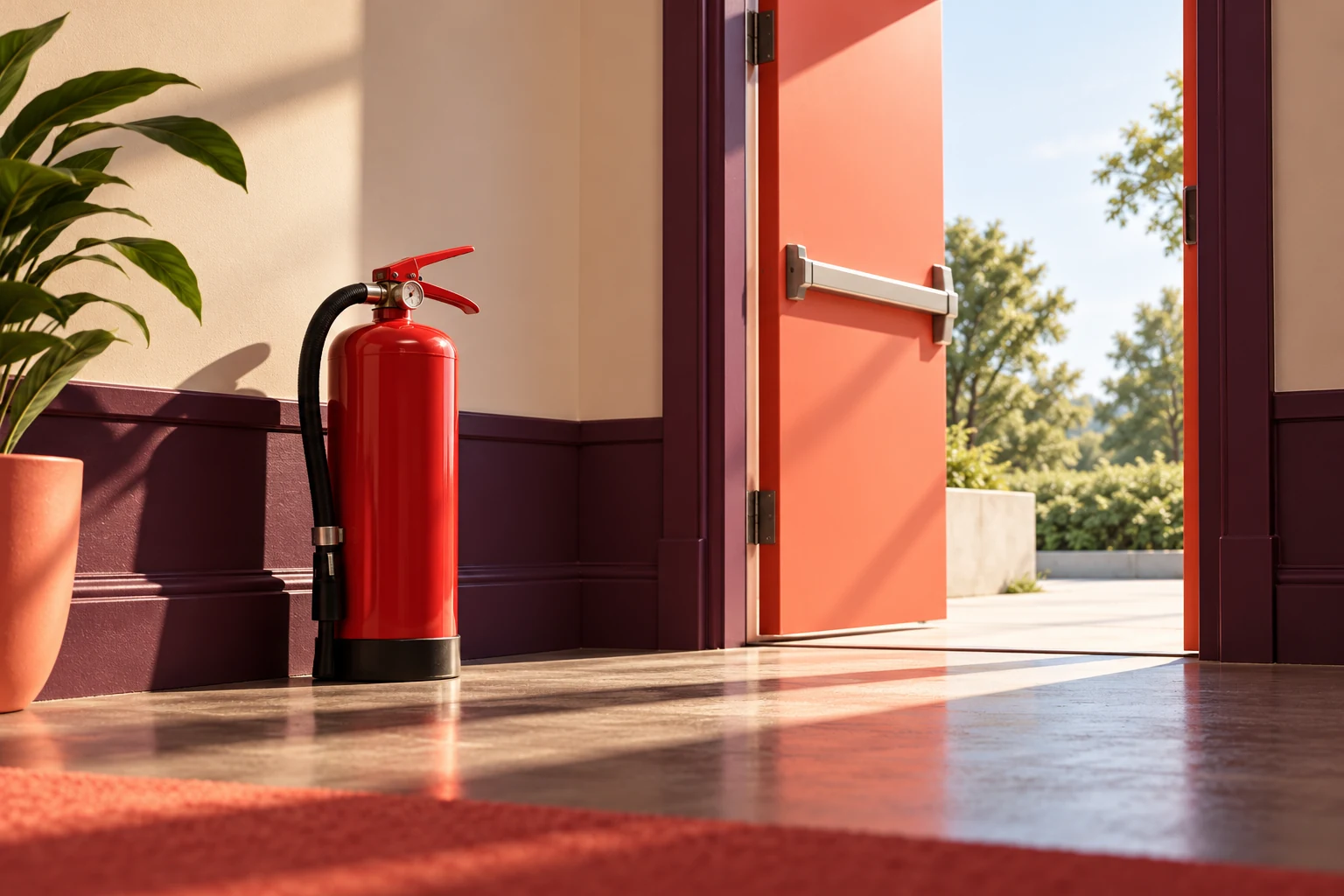
Seeing a fire extinguisher on a wall does not mean every new worker is expected to fight a fire. The first useful question is your role in the site’s emergency plan: how to raise the alarm, where to go and who is trained to respond.
At a farm or packing workplace, people may be unfamiliar with buildings, exits and the location of others. A calm explanation before work begins is far more valuable than trying to work it out through smoke.
Do not turn equipment into an expectation
Fire and Rescue NSW says an extinguisher should be used only by a person who is trained and when it is safe. In an emergency, call 000. Its workplace fire guidance is not a direction for an untrained employee to enter danger or attempt a rescue.
A general article cannot assess whether a fire is safe to approach, which extinguisher suits it or whether conditions are changing. If there is doubt, prioritise getting to safety and following the emergency response. Never let concern about protecting stock or machinery outweigh personal safety.
Ask about your actual role
Before starting, ask how the alarm is raised, which exit and assembly area apply and who coordinates the response. If you are assigned a formal role, ask what training and equipment support it. A person who knows where an extinguisher is stored has not necessarily received suitable instruction in its use.
SafeWork NSW says emergency plans must include procedures, testing and relevant worker information, training and instruction. Its guidance specifically includes casual, part-time and shift workers in emergency training. Read the emergency-plan guidance.
Walk the ordinary route while conditions are normal
Ask to see the exit and assembly point rather than relying only on a small map. Check how the route works from your actual workstation, including where a new worker might hesitate. Raise obstructions through the normal safety process; do not quietly accept a blocked route as a seasonal inconvenience.
WorkSafe Victoria’s emergency-planning guidance also emphasises evacuation procedures, trained emergency personnel and practice. Victoria has its own legal framework, so a NSW checklist is not a substitute for the workplace’s Victorian arrangements.
A practical pre-shift conversation
Hypothetical example: a worker sees an extinguisher beside a packing line and asks whether they are expected to use it. The supervisor explains their role is to raise the alarm, move by the designated exit and report to the assembly area; trained personnel have separate responsibilities. The worker then walks the route during induction.
That answer is better than “use common sense”. It removes an assumption before pressure, noise and urgency make decisions harder. The same conversation should be available to workers arriving on a later shift, not only those present at the season’s first induction.
Questions to settle before an emergency
- How will I recognise the alarm or evacuation instruction?
- Where is the assembly point for this work area?
- Who needs to know I have reached safety?
- What do I do if the usual route is unavailable?
- Am I assigned any emergency role, and have I been trained for it?
If instructions are not understood, ask for a clear explanation using a suitable communication method. Do not rely on a worker following the crowd when crews are spread across different locations or work periods.
After an evacuation, do not improvise the return
Follow the authorised directions about re-entry and restarting work. A building looking quiet does not establish that it is safe. Report missing people or information through the emergency coordinator instead of going back to look independently.
This is ongoing emergency-preparation guidance checked in October 2026, not a new extinguisher law from the last six months. Our incident-account guide explains how factual information can support review after the immediate danger has been addressed.
Official sources and next steps
- Fire and Rescue NSW: In case of fire
- SafeWork NSW: Emergency plans
- WorkSafe Victoria: General safety issues and emergency preparation
For SkillHaus recruitment enquiries, contact our team. For a ruling about your pay, safety duties or visa position, use the relevant regulator or a qualified adviser.
By SkillHaus. Information checked 29 October 2026. General information, not individual legal, migration, tax or medical advice. Rules and personal circumstances can change.