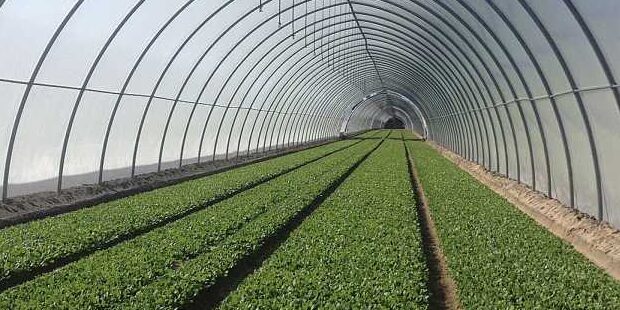
Due to the fact that some farmers in the flood zone plant their crops under cover, they were mostly unaffected when lettuce prices spiked to $10 as a result of the catastrophic weather in New South Wales and Queensland. According to experts, protected cropping may hold the answer to maintaining cabbage in its proper place—in spring rolls and away from burgers—and to encouraging farmers to resume planting after catastrophic weather. Horticultural crops are grown under or inside of structures, which is known as protected cropping.
Paul Gauthier, a professor of protected cropping at the Queensland Alliance for Agriculture and Food Innovation, claims that it involves more than just greenhouses. According to him, there are three forms of protective cropping. “It can be in a high tunnel that shields the crop from the weather, inside a greenhouse, or in a structure that is completely enclosed and the plants never see the light,” he said. In some hydroponic systems, protected cropping enables farmers to regulate the temperature, water, and soil of the plants they are growing. It can shield plants from the damaging impacts of weather, according to Professor Gauthier. He said that by keeping everything inside and managing your inputs, you can start forecasting the results while also protecting your plants.
“If a storm occurs, all of your plants will be safe and you can continue to produce food as long as your building can withstand the storm.” The method has long been well-liked in Europe, but it appears that demand is increasing in Australia as well. The organisation that represents farmers that employ hydroponics or greenhouses is called Protected Cropping Australia. It is one of the production systems in the world that is expanding the fastest, according to executive officer Sam Turner. According to him, adoption rates in Australia hover around the 5% mark whereas growth rates abroad can reach 10%.
“Over the past five to ten years, the industry has experienced substantial expansion, and it appears that this growth is accelerating in Australia.” According to Mr. Turner, the increase is being fueled by the efficiency that shielded cropping offers in addition to weather protection. According to him, some systems use up to 90% less water for the same yields, and because the plants are located in a more favourable climate, yields are significantly higher. “Labor is easier since the crop is much more uniform, crop quality is considerably greater, and managing pest and disease challenges is much easier.”
In the past, Australian farmers did not need to invest in crop protection because of the favourable growing conditions and the abundance of land. Mr. Turner predicts that will change. Because of the recent flooding across the nation, he noted, many growers who ordinarily wouldn’t consider protective cropping are now doing it as a form of insurance against the extreme weather. Mr. Nguyen and Mr. Vo want to encourage more Lockyer Valley farmers to adopt protected cropping. Sharing information is powerful, and the more we can do it, the more we can create a successful sector, according to Mr. Nguyen. “With Australia’s expanding population and rising demand, I believe the future will be brighter if we put the word out there.”
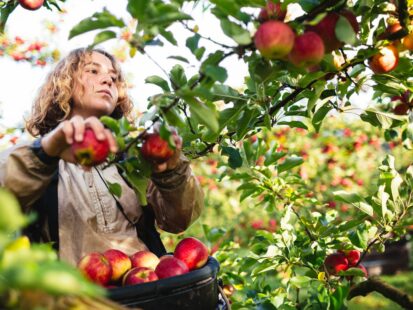
When one imagines a farmer in australia or an agricultural corporate leader, chances are that the picture is that of a man. This is because the majority of people around boardroom table in agriculture are still men, as is the typical stereotype of a farmer. This makes sense as up until 1994, where women were […]
Read More →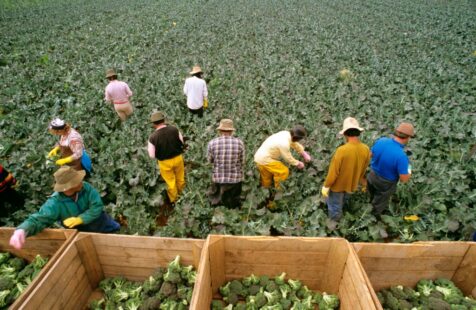
WHEAT: THE SUPER GRAIN OF AUSTRALIA When it comes to harvesting grains, wheat is a major winter crop grown in Australia. The sowing commences in autumn and the harvesting is based on the climatic conditions of the season. According to a general rule of thumb, wheat is harvested during spring and summer. Some of the […]
Read More →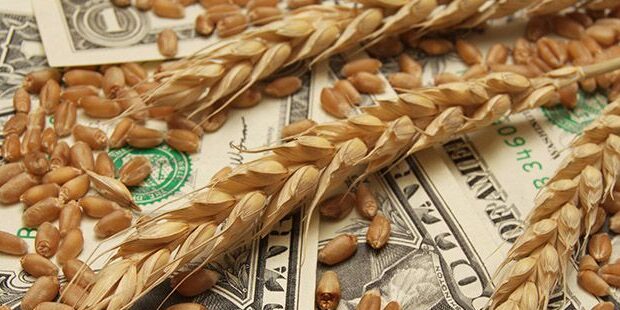
It cannot be denied that Australia is one of the world’s largest exporters. Therefore, the nation is now set to witness a second-consecutive year of strong wheat exports. Even though there are government interventions and production cuts, Australia has still managed to sustain its exports. At the current moment, the country is forecasted to produce […]
Read More →